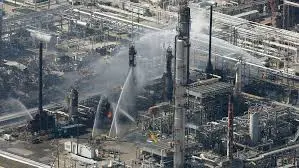

In high-risk operations, the most dangerous moments rarely arrive with warning.
A unit trips offline.
A control room fills with alarms.
A field crew faces conflicting signals under time pressure.
In those moments, decision-making quality matters more than technology, procedures, or intent.
Senior leaders often ask a version of the same question:
How do people actually make good decisions under stress when failure is not an option?
The answer is not theoretical.
High-reliability organizations have been refining it for decades.
Why stress breaks decision-making faster than leaders expect
Under acute pressure, the human brain does not behave rationally.
Stress narrows attention.
Working memory collapses.
People default to habit, assumption, and incomplete mental models.
This is why serious incidents continue to occur in organizations with:
Modern equipment
Detailed procedures
Significant safety investment
The issue is not a lack of systems.
It is how humans interact with those systems under pressure.
What actually improves decisions when stakes are high
Across energy, chemical processing, utilities, maritime, and nuclear operations, the most reliable organizations apply layered decision-making defenses, not single solutions.
Simulation that builds judgment, not just compliance
High-fidelity simulations and realistic drills create recognition-based decision capability.
When people have seen a situation before, they do not freeze.
They recognize patterns and act decisively.
This is why simulation training works when classroom training does not.
People perform how they practiced.
Team decision discipline, not hero leadership
Crew Resource Management principles focus on:
Clear communication
Shared situational awareness
The ability to challenge decisions respectfully
In high-risk environments, the best decisions are rarely made by individuals acting alone.
They are made by teams that know how to think together under pressure.
Structured decision frameworks that slow chaos
Tools such as:
Incident Command System structures
Emergency operating procedures
Challenge-response protocols
STAR (Stop, Think, Act, Review)
- OODA Loops
These are not bureaucracy.
They are cognitive guardrails when stress tries to overwhelm judgment.
Stress management as an operational skill
Elite operators use simple techniques to maintain cognitive control:
Controlled breathing
Deliberate pauses
Stress inoculation through realistic drills
This is not wellness training.
It is performance protection.
Proactive thinking before pressure arrives
Pre-mortems, scenario planning, and red-team exercises reduce the number of decisions that must be made under crisis conditions.
The best decision under pressure is often the one you never have to make.
Technology that supports, not replaces, judgment
AI and decision-support tools are powerful when they:
Reduce noise
Surface early signals
Provide context and options
They fail when leaders assume technology can replace human judgment instead of strengthening it.
The leadership factor no system can replace
Every one of these techniques works only when leadership behavior supports them.
Leaders determine:
Whether people speak up
Whether hesitation is punished or explored
Whether pressure quietly overrides discipline
No tool compensates for leadership signals that undermine trust, clarity, or accountability.
The cost of getting this wrong
The cost of poor decision-making under pressure is not limited to incidents.
It includes:
Normalized deviation
Silent near misses
Eroded trust
Leaders surprised by outcomes they should have seen coming
These costs accumulate quietly until they surface publicly.
The question worth asking now
Before the next investment, system, or initiative, leaders should ask:
Have we actually trained our people to think, decide, and act effectively when pressure peaks?
High reliability is not about eliminating stress.
It is about preparing people to perform inside it.
High Reliability Group | Operational Excellence. Built for Execution.
We help leaders in safety-critical industries design cultures of accountability, resilience, and continuous learning.
info@highrelgroup.com | (331) 223-9722 | highrelgroup.com